


Choosing the Right Oxygen Absorber Size & Using Them with Mylar Bags
When it comes to long-term food storage, the combination of Mylar bags and oxygen absorbers creates an unbeatable preservation system. Whether you're storing rice, beans, spices, or dehydrated foods, understanding how to select the right oxygen absorber size and properly seal your Mylar bag food packaging is essential for maintaining freshness and extending shelf life.
Understanding Oxygen Absorbers for Food Storage
Oxygen absorber packets, also known as oxygen scavengers, are small sachets designed to remove oxygen from sealed food packaging. OxySorb oxygen absorbers contain a safe mixture of iron powder, salt, and activated carbon enclosed in a breathable pouch. Once placed inside a sealed container, these packets absorb oxygen through a natural oxidation process, reducing oxygen levels to as low as 0.01% and creating a nitrogen-rich environment that prevents spoilage.
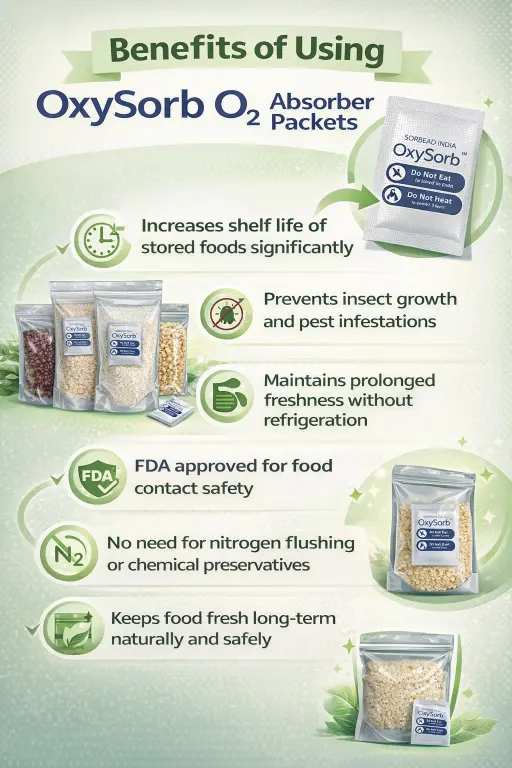
Benefits of Using OxySorb O2 Absorber Packets
- Increases shelf life of stored foods significantly
- Prevents insect growth and pest infestations
- Maintains prolonged freshness without refrigeration
- FDA approved for food contact safety
- No need for nitrogen flushing or chemical preservatives
- Keeps food fresh long-term naturally and safely
Oxygen Absorber Size Chart: Choosing the Right Capacity
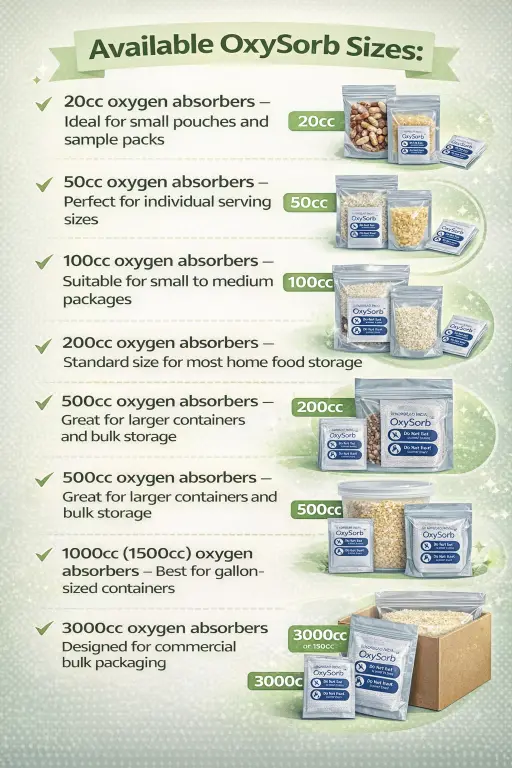
OxySorb oxygen absorber packets are available in multiple sizes to accommodate different packaging needs. The capacity is measured in cubic centimeters (cc), indicating the volume of oxygen each packet can absorb.
Available OxySorb Sizes:
- 20cc oxygen absorbers – Ideal for small pouches and sample packs
- 50cc oxygen absorbers – Perfect for individual serving sizes
- 100cc oxygen absorbers – Suitable for small to medium packages
- 200cc oxygen absorbers – Standard size for most home food storage
- 500cc oxygen absorbers – Great for larger containers and bulk storage
- 1000cc (1500cc) oxygen absorbers – Best for gallon-sized containers
- 3000cc oxygen absorbers – Designed for commercial bulk packaging
How Many Oxygen Absorbers Per Kg: Practical Guidelines
The amount of oxygen absorbers for Mylar bags depends on several factors including the type of food, container size, and residual air space. Here's a practical guide for how many oxygen absorbers per kg you'll need:
General Food Storage Recommendations:
For Dense Foods (Rice, Beans, Wheat, Flour):
- 1 kg (2.2 lbs) in a Mylar bag: 100cc absorber
- 2-3 kg (4.4-6.6 lbs): 200cc absorber
- 5 kg (11 lbs): 500cc absorber
- 10 kg (22 lbs): 1000cc absorber
For Lighter Foods (Spices, Dehydrated Vegetables): These foods have more air space, so increase the absorber size:
- 500g (1.1 lbs): 100cc absorber
- 1 kg (2.2 lbs): 200cc absorber
- 2-3 kg: 500cc absorber
Best Oxygen Absorber for Specific Foods:
Best oxygen absorber for rice: Use 200cc-500cc packets for 2-5 kg quantities. Rice is dense and leaves minimal air space, making it easier to preserve.
Best oxygen absorber for beans: Similar to rice, 200cc-500cc packets work well for bulk storage. Beans store excellently with proper oxygen absorption.
Best oxygen absorber for spices: Due to their light and porous nature, use 100cc-200cc packets even for smaller quantities (250g-1kg) to account for increased air space.
Mylar Bag Food Packaging Guide with OxySorb
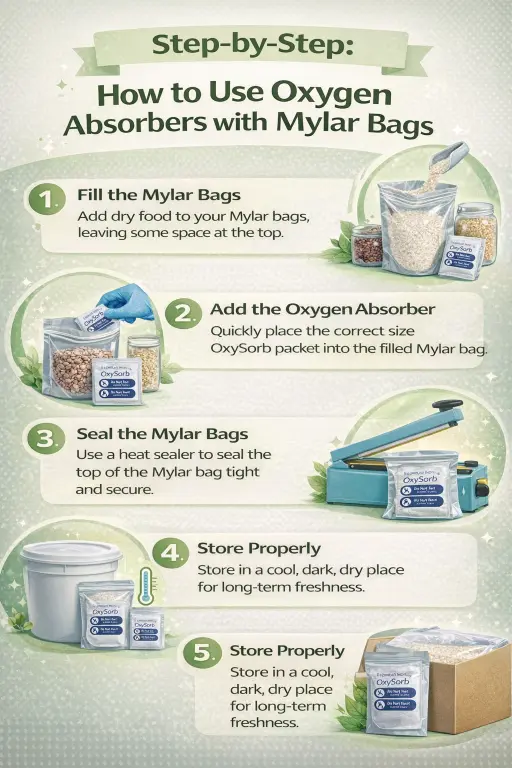
Step-by-Step: How to Use Oxygen Absorbers with Mylar Bags
Step 1: Prepare Your Workspace Work quickly and efficiently. Only open the number of OxySorb oxygen absorber packets you'll use immediately, as they begin working the moment they're exposed to air.
Step 2: Open OxySorb Master Pack Carefully Avoid sharp edges that could damage the master bag. Remove only the quantity needed and spread them on a clean tray for 15-20 minutes before sealing.
Step 3: Fill Your Mylar Bags Pour your food items (grains, pulses, spices, dehydrated fruits and dry vegetables, sweets, or makhana) into the Mylar bag, leaving 3-4 inches of space at the top for sealing.
Step 4: Add the Oxygen Absorber Place the appropriate size OxySorb oxygen absorber packet on top of the food. For bags over 5 kg, consider using two smaller absorbers to ensure even oxygen removal.
Step 5: Remove Excess Air Gently press out as much air as possible from the Mylar bag without crushing the food or oxygen absorber.
Step 6: Seal Immediately Use a heat sealer to seal the Mylar bag completely. Work within 30 minutes of opening the oxygen absorber packets for optimal performance.
Step 7: Reseal Unused Absorbers Immediately reseal the master bag containing unused absorbers after pressing out all air. Store in a cool, dry place.
Food Packaging for Extend Shelf Life: Sealing Tips for Best Results
Critical Sealing Tips:
- Use Quality Mylar Bags Choose food-grade, thick Mylar bags (5-7 mil thickness) designed specifically for long-term food storage. Thicker bags provide better oxygen and moisture barriers.
- Ensure Complete Seal Run your heat sealer across the top of the bag twice to create a double seal. Check for any gaps or weak points that could allow air infiltration.
- Label Your Packages Mark each package with the contents, oxygen absorber size used, and packaging date. This helps track rotation and storage times.
- Store Properly Keep sealed Mylar bags in a cool, dark, dry location. Avoid direct sunlight and temperature extremes. Properly sealed packages with oxygen absorbers can maintain food quality for 5-25 years depending on the food type.
- Monitor Initial Vacuum Effect Within 24-48 hours, properly sealed bags should show a slight vacuum effect as the OxySorb absorbers remove oxygen. The bag should appear tight against the contents.
Common Questions about Oxygen Absorbers for Mylar Bags
Can You Use Too Many Oxygen Absorbers?
Yes, while it won't harm your food, using excessively large absorbers wastes resources. Follow the oxygen absorber size chart recommendations based on container volume and food type.
Oxygen Absorber vs Silica Gel: Which One to Use?
- Oxygen absorbers: Combat taste changes, color changes, microorganism growth (fungus, bacteria, insects)
- Silica gel: Prevents moisture-related issues like sogginess
- Combined use: For foods like makhana that need both oxygen and moisture control, use both packets together
Are OxySorb Oxygen Absorbers Safe for Food?
Absolutely. OxySorb oxygen absorber packets are completely food-safe, non-toxic, environment-friendly, and ROHS certified. They never react with food products and can be disposed of as normal waste.
No Preservatives Needed: The Natural Preservation Solution
By using OxySorb O2 absorbers packets with proper Mylar bag food packaging, you eliminate the need for chemical preservatives, vacuum sealing equipment, or nitrogen flushing. This natural preservation method keeps your grains, pulses, spices, dry fruits, dehydrated vegetables, sweets, namkeen, and makhana fresh and safe for extended periods.
Whether you're a home prepper, small business owner, or commercial food packager, understanding the right oxygen absorber size and proper sealing techniques ensures your stored foods maintain optimal quality, taste, and nutritional value for years to come.
Ready to start preserving your food the right way? Choose OxySorb oxygen absorbers for reliable, long-term food storage that keeps your ingredients as fresh as the day they were packed.
